


Why Aroma Oils Often Fail in Real Applications
Many businesses choose aroma oils based purely on scent preference. At first, the fragrance may seem appealing, but once used in products such as diffusers, candles, or air fresheners, performance issues appear. Weak diffusion, rapid evaporation, or inconsistent scent strength are common problems.
These issues are not caused by the idea of aroma oils themselves, but by how they are formulated and applied. At CNUS, we approach aroma oil development through controlled formulation, compatibility testing, and standardized production, ensuring that scent performance remains stable across different applications.
Materials and Formulation: What Defines a High-Quality Aroma Oil
Aroma oils are not simple mixtures. Their performance depends on a combination of raw materials, formulation ratios, and industrial processing methods.
Key factors include:
- Concentration and balance of fragrance components
- Volatility and diffusion rate
- Heat resistance for candle applications
- Stability over time and storage conditions
According to International Fragrance Association, proper formulation and compliance standards are essential to ensure both safety and consistent performance in fragrance products.
Why Choosing the Right Supplier Matters More Than the Scent
Many suppliers offer a wide variety of aroma oils, but selection based on scent alone often leads to long-term issues.
At CNUS, we focus on:
- Standardized formulation processes
- Batch consistency across production
- Application-specific customization
- OEM and private label support
This ensures that aroma oils perform reliably in real production environments rather than just in initial samples.
What Actually Matters When Selecting Aroma Oils
Performance Over Scent
Scent is important, but performance determines product success. A strong fragrance that fades quickly is not suitable for commercial use.
Stability and Compatibility
Aroma oils must match the application—what works in a diffuser may not work in a candle.
Consistency Across Batches
Inconsistent aroma oils can damage brand reputation and lead to product complaints.
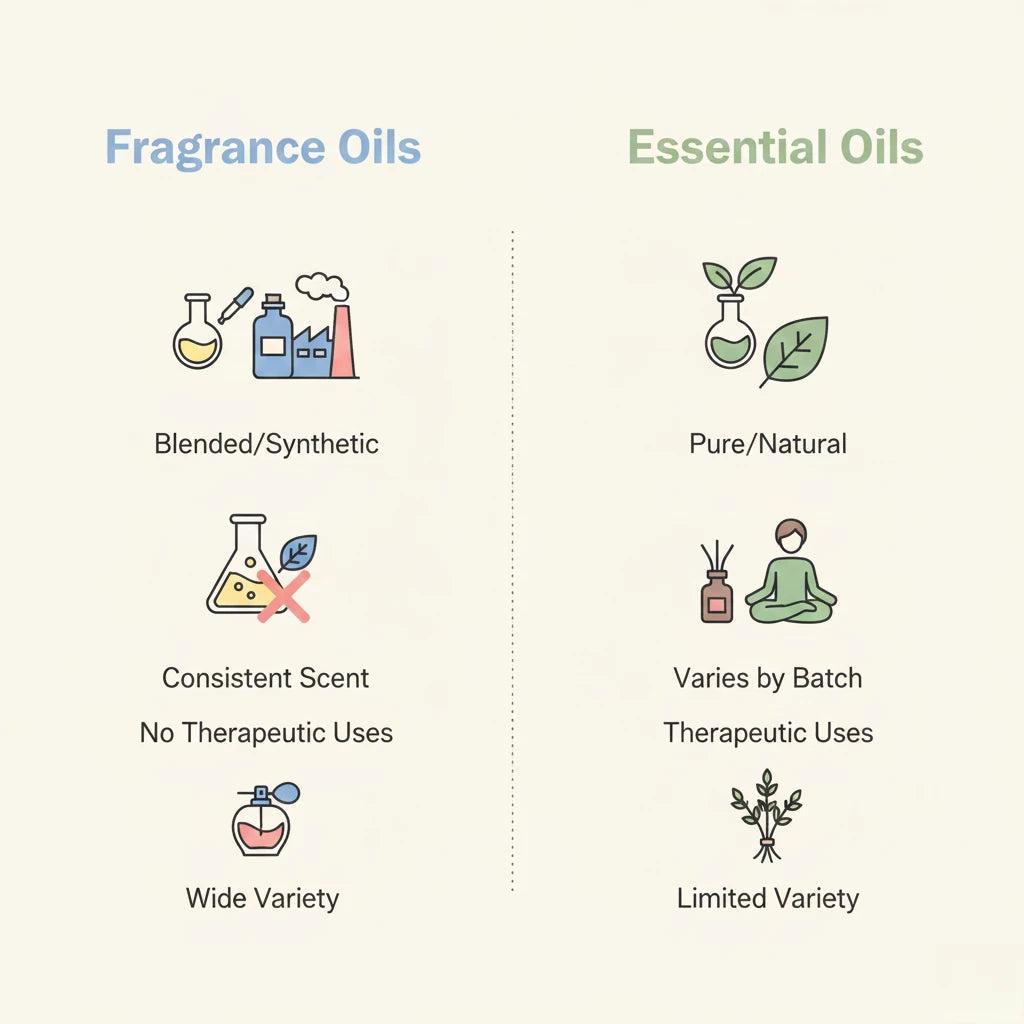
Aroma Oils vs Essential Oils: Practical Differences
| Factor | Aroma Oils | Essential Oils |
|---|---|---|
| Stability | High | Medium |
| Scent variety | Wide | Limited |
| Cost | Lower | Higher |
| Performance in products | Reliable | Variable |
For most commercial applications, aroma oils provide better scalability and consistency.
Where Aroma Oils Are Used
Home Fragrance
- Diffusers require controlled evaporation
- Candles require heat-stable oils
Commercial Applications
- Hotels need consistent scent identity
- Retail stores rely on stable fragrance performance
Industrial Use
- Air fresheners require rapid diffusion
- Cleaning products need chemical stability
Real Case: Improving Product Consistency with Better Oil Selection
A home fragrance brand experienced frequent complaints about inconsistent scent strength across their product line. The issue was traced back to unstable aroma oil formulations sourced from multiple suppliers.
By switching to a standardized formulation system and aligning oil selection with application requirements, they achieved:
- Consistent scent output across batches
- Improved customer satisfaction
- Reduced product return rates
This demonstrates that choosing the right aroma oils is a technical decision, not just a creative one.
Frequently Asked Questions
What are aroma oils used for
Aroma oils are widely used in candles, diffusers, air fresheners, and commercial scenting systems.
Are aroma oils better than essential oils
They serve different purposes, but aroma oils are generally more stable and cost-effective for large-scale production.
How to ensure consistent quality
Work with suppliers that offer controlled formulation and batch sta
Final Thoughts: Focus on What Truly Matters
Choosing aroma oils should never be based on scent alone. Performance, stability, and compatibility are what determine success in real appl
If you are evaluating aroma oils for different applications, you can explore suitable options on the product page to understand how
To learn more about our production process and formulation expertise, visit the about page.